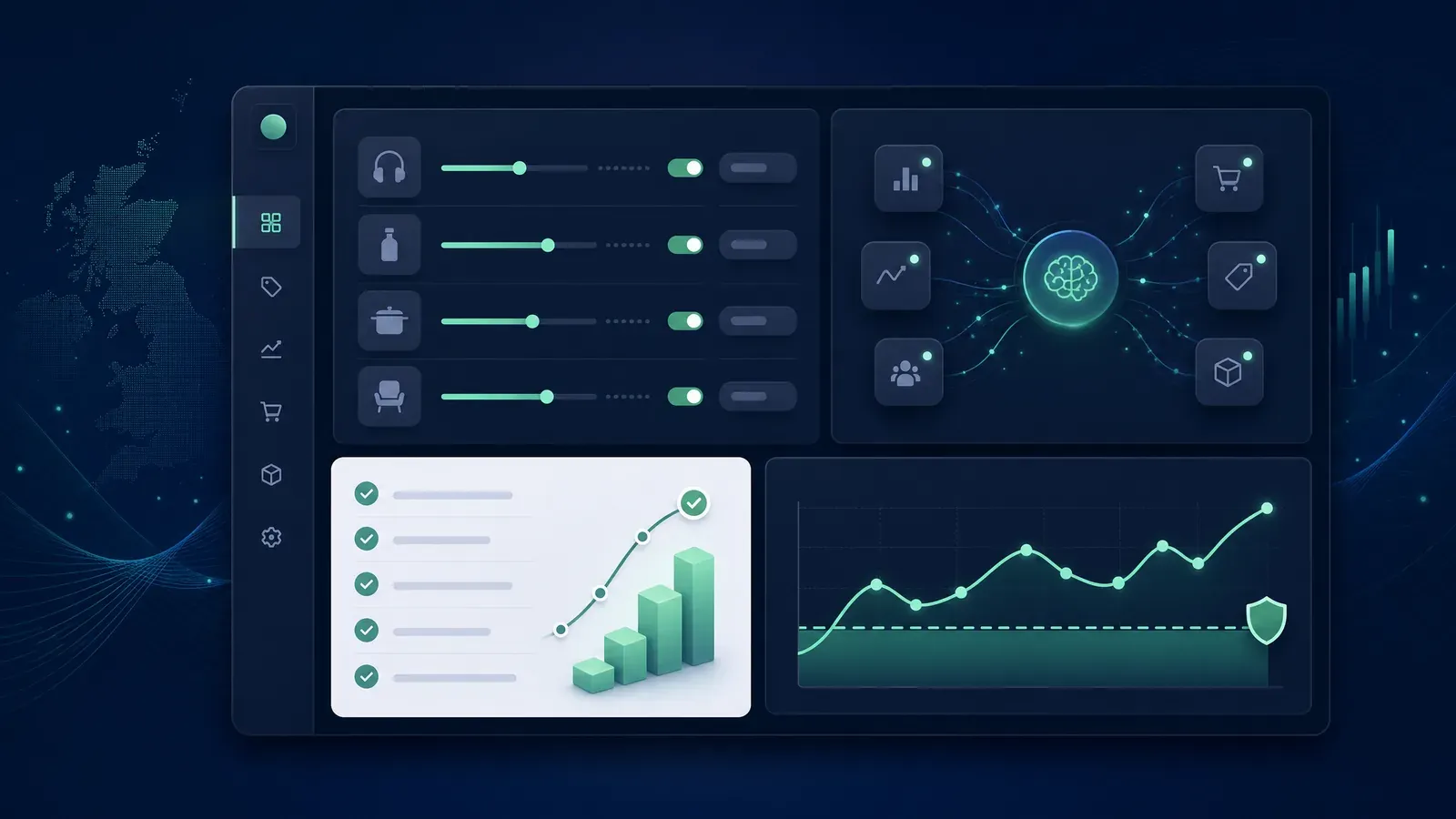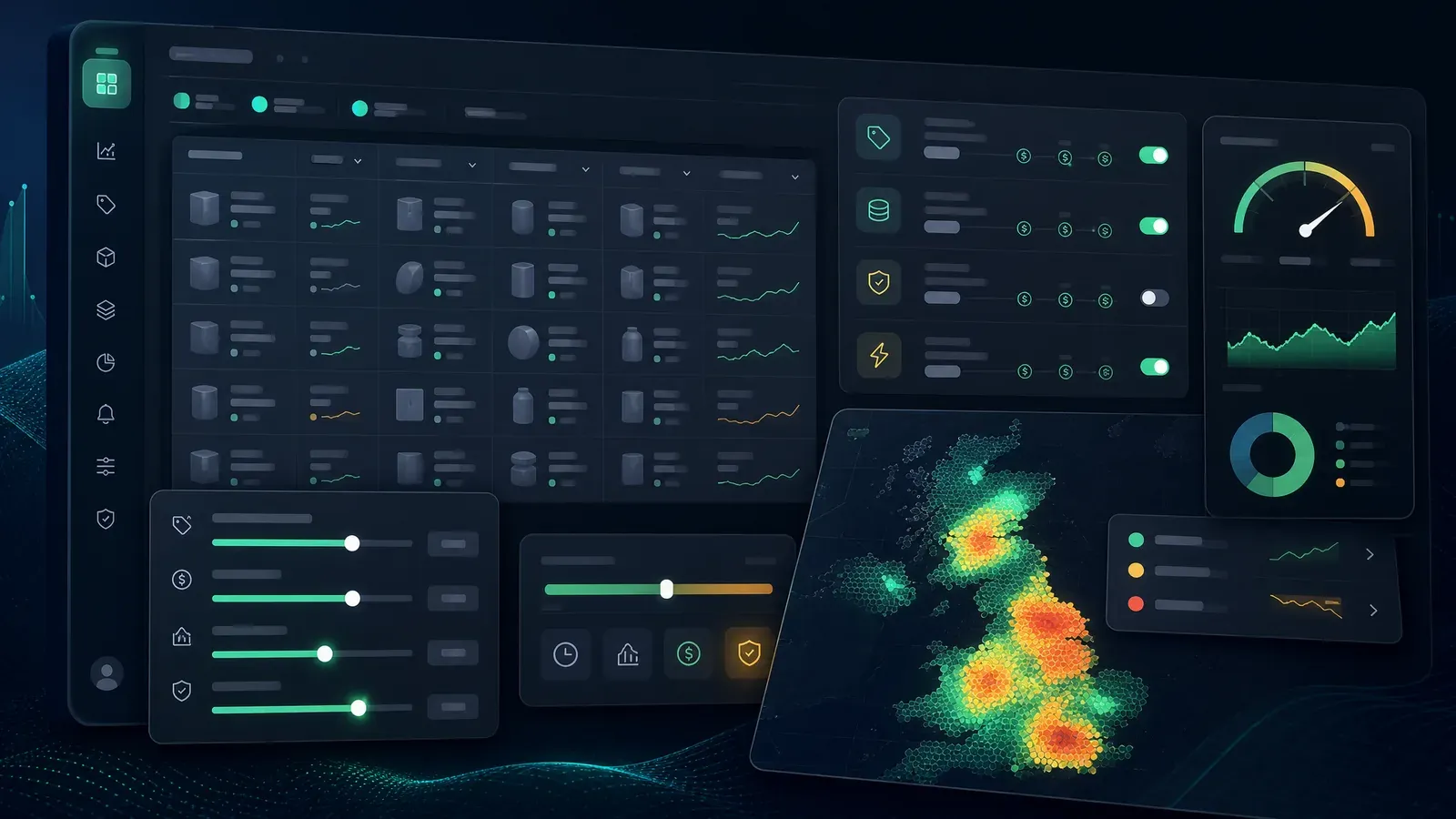

Competitor price monitoring sounds straightforward until you start doing it at catalogue scale. Sellers usually begin by watching the lowest visible offer, then discover that the lowest visible offer is often the least useful signal in the market.
Good monitoring is not about staring at competitor prices all day. It is about spotting the changes that should affect your pricing decisions, while ignoring noise that would pull you into bad reactions.
Why competitor monitoring matters
On Amazon, pricing moves can affect:
If you do not monitor the market, you react late. If you monitor the wrong signals, you react badly.
The mistake most sellers make
Many sellers treat competitor monitoring as a race to match the cheapest price.
That misses the point.
A useful monitoring system should tell you:
That is a very different job from blindly following every dip.
What to track in practice
| Signal | Why it matters | What to do with it |
|---|---|---|
| Lowest landed offer | Shows headline market pressure | Check whether it is sustainable before reacting |
| Buy Box owner changes | Reveals who is actually winning share | Review whether price or offer quality is driving the change |
| Repeated floor pressure | Flags margin risk on an ASIN | Tighten floors or reclassify the SKU |
| FBA versus FBM mix | Changes the meaning of price gaps | Use separate logic where fulfilment method matters |
| Stock-outs from major competitors | Can create temporary pricing room | Avoid holding old prices out of habit |
| Sudden one-seller crashes | Often noise, clearance, or mistakes | Monitor first, do not auto-match by default |
What to ignore or deprioritise
Not every visible price move deserves a response.
You usually want to be cautious when the signal comes from:
Competitor monitoring should help you make better decisions, not encourage panic.
A simple monitoring workflow for operators
1. Segment the catalogue first
Do not watch every SKU the same way.
Create groups such as:
That lets you spend attention where the risk actually sits.
2. Define your response rules
Before you look at competitor movement, decide what counts as a real trigger.
Examples:
Without that structure, monitoring becomes a time sink.
3. Turn signals into action thresholds
The monitoring system should not just say "a competitor changed price". It should classify whether the change deserves action, review, or silence.
Useful thresholds look like this:
| Trigger | Action | Why |
|---|---|---|
| Competitor moves but stays above your profitable floor | Let the repricer respond inside normal limits | This is ordinary competition |
| Competitor holds below your floor for several checks | Review the SKU, but do not auto-copy | The market may have shifted, or the competitor may be irrational |
| Buy Box loss on a hero SKU while still above floor | Inspect offer quality, stock, and fulfilment before changing strategy | Price may not be the only cause |
| Repeated at-minimum pressure | Check COG, fees, VAT, and rule fit | The floor or the segment may need attention |
| One-seller crash that reverses quickly | Ignore unless it repeats | Short-lived noise should not rewrite your strategy |
| Competitors stock out above your normal range | Consider controlled upward movement | Monitoring should protect upside as well as downside |
This is where Intelligent Repricing earns its place. The useful job is not simply reacting faster. It is separating normal competition from events that need operator judgement.
For more advanced accounts, AI repricing should support this same discipline: summarise pressure, identify risky SKUs, and explain why a price moved or held. It should not hide the commercial rule.
4. Review movement against your own floor
A competitor change only matters if it changes what you can profitably do.
This is why a proper minimum-price framework matters. If your floors are vague, your monitoring becomes vague too. Start with Min Max Price Strategy for Amazon Sellers if your current setup is still approximate.
Monitoring example, two different competitor drops
| Scenario | Bad response | Better response |
|---|---|---|
| Competitor drops 2 percent and holds for several hours | Match instantly without checking margin | Reprice within rule limits if still commercially sensible |
| Competitor crashes below rational economics for one hour | Follow the drop automatically | Hold floor, monitor duration, review if the market resets |
This is the core distinction. Monitoring is valuable when it helps you separate durable competitive pressure from temporary nonsense.
Where automation helps most
Manual checks do not scale well once the catalogue grows.
Automation helps by:
But automation only works well if the strategy behind it is sensible. If you automate weak rules, you just make weak decisions faster.
Relevant supporting reads:
Common warning signs your monitoring setup is poor
Final takeaway
Competitor price monitoring is useful when it gives you commercial context, not just more numbers.
Track the signals that change real decisions, ignore irrational noise, and make sure every response is constrained by a price floor you trust. That is how monitoring supports better repricing instead of becoming a more sophisticated version of guesswork.
If you want a system that turns market observation into controlled action, review AI repricing, dynamic pricing for Amazon, and pricing.
Related Resources
Explore Ascent Features: