

Private label and wholesale are often compared as if one is the “better” Amazon model. That is the wrong question.
The useful question is: which set of problems do you want to be good at solving?
Private label is a product and brand-building model. You control more of the offer, but you also carry more uncertainty before the first sale. Wholesale is a catalogue and execution model. You start with existing demand, but you operate closer to the market every day, especially on shared listings where pricing pressure can move quickly.
If you choose based only on headline margin, you will probably choose badly. The model has to fit your capital, your appetite for risk, your supplier access, and the way you want to run the business week after week.
The short answer
Private label is usually a better fit when you want to build an asset you own. Wholesale is usually a better fit when you want faster commercial feedback and are comfortable winning through sourcing, stock discipline, and pricing control.
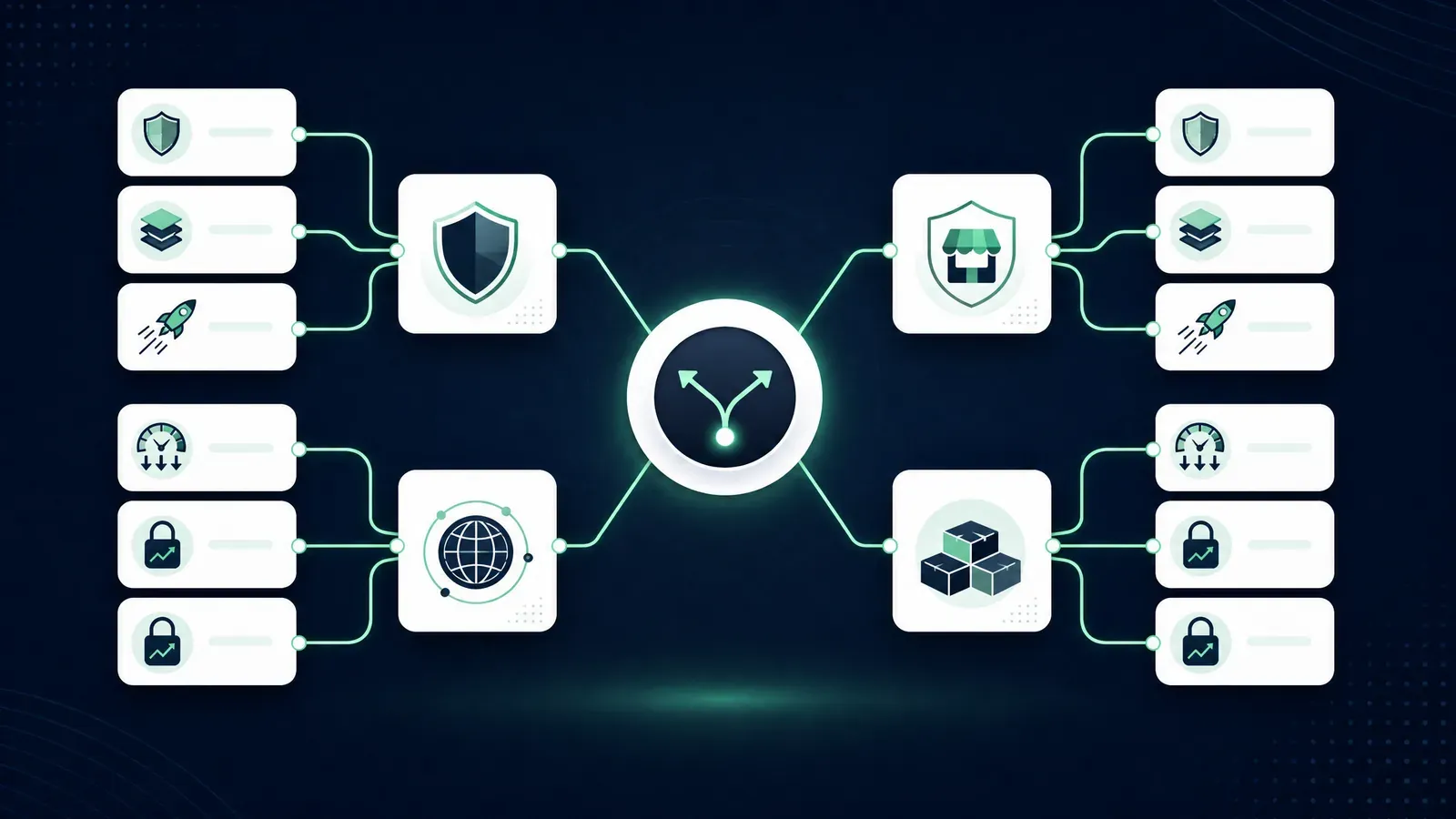
Private label vs wholesale at a glance
| Area | Private label | Wholesale |
|---|---|---|
| Core skill | Product development and brand positioning | Supplier access and catalogue operations |
| Speed to first listing | Slower | Faster |
| Demand validation | Must be proven through research and launch | Often visible before you buy |
| Listing control | High | Limited on shared ASINs |
| Brand ownership | Yes | No |
| Buy Box pressure | Usually lower on your own listing | Often central to the model |
| Capital risk | Concentrated in fewer product bets | Spread across stock and supplier terms |
| Margin profile | Can be stronger if the product works | Often tighter, but more measurable |
| Main failure mode | Bad product-market fit | Margin erosion across too many SKUs |
The difference is not “brand versus no brand”. It is control versus velocity.
How the economics really differ
Private label margin can look attractive on paper because you are not buying from a brand owner or authorised distributor at a fixed resale spread. But that margin is not free. It has to pay for product research, samples, packaging, photography, listing work, ads, review-building, failed tests, and inventory that may take longer to turn.
Wholesale margin often looks less exciting at SKU level, but the model can be cleaner to measure. You can look at rank, offer count, Buy Box history, fees, landed cost, VAT impact, and realistic repricing floors before committing. The danger is that a profitable spreadsheet can become an unprofitable catalogue if pricing discipline is weak.
A useful operator lens:
| Question | Private label | Wholesale |
|---|---|---|
| Where does profit get created? | Product differentiation, brand, listing conversion | Buying terms, availability, offer quality, repricing discipline |
| Where does profit leak? | Launch costs, weak conversion, stranded inventory | Price wars, poor floors, FBA fee changes, supplier cost creep |
| What needs reviewing weekly? | Ads, conversion, inventory, reviews | Buy Box share, competitor behaviour, stock turns, repricing exceptions |
| What breaks first at scale? | Product pipeline and cash tied in launches | Catalogue control and margin governance |
When private label makes more sense
Private label is the stronger choice when you have a real product angle, not just a logo to slap on a commodity.
It makes sense when you can:
The best private label sellers are not guessing. They are finding a gap in the existing offer set, then making the buying decision easier for a specific customer. That might be better materials, better sizing, better compliance documentation, clearer imagery, stronger bundles, or simply a more trustworthy listing.
Private label is a poor fit if the plan is “source a generic product, add a brand name, and hope ads solve it”. That is not strategy. That is inventory roulette with a nicer font.
When wholesale makes more sense
Wholesale is the stronger choice when you can access supply and run the numbers tightly.
It makes sense when you can:
Wholesale often looks simpler because you are not creating the product or listing from scratch. Operationally, it is not simple. It is a machine that needs clean inputs: landed cost, minimum viable margin, inventory cover, replenishment rules, repricing logic, and exception handling.
That is why wholesale sellers usually outgrow basic rules quickly. If you are carrying a real catalogue, you need a setup built around floors, ceilings, fulfilment differences, Buy Box behaviour, and seller quality — not a blunt “beat the lowest price by 1p” rule. Ascent’s Amazon repricer for wholesale sellers page covers that operating problem directly.
The risk profile is completely different
Private label risk is front-loaded. You can lose money before the market gives you much feedback. The product may be wrong, the listing may not convert, reviews may build slowly, ads may be expensive, or a stronger competitor may already own the keyword economics.
Wholesale risk is more continuous. You may buy well and sell profitably for months, then lose margin because of a new seller, a supplier price increase, a fee change, a stockout, or a competitor repricing below sensible levels.
That makes the control systems different:
Neither model is passive. They just punish different kinds of laziness.
What usually goes wrong with private label
1. The product is not differentiated enough
A private label product needs a reason to exist. Better packaging is not enough if the product solves the same problem in the same way at the same perceived quality.
2. The launch budget is underestimated
Samples, imagery, listing assets, ads, giveaways, compliance checks, and early review momentum all cost money or time. Sellers who only budget for inventory are undercapitalised before they begin.
3. Inventory decisions are too optimistic
Large MOQs feel efficient until the product underperforms. Private label mistakes are painful because cash gets trapped in a small number of bets.
4. Pricing is treated as a brand exercise only
Even private label sellers need margin discipline. You may not be fighting ten sellers on the same ASIN, but you are still competing against substitutes, ads, and customer expectations.
What usually goes wrong with wholesale
1. Sellers buy too many marginal SKUs
A catalogue can look diversified while quietly filling with low-quality opportunities. If a SKU only works under perfect conditions, it probably does not work.
2. Pricing floors are weak or missing
Wholesale repricing without cost-aware floors is dangerous. It can protect sales while destroying profit, which is a very efficient way to look busy and get poorer.
3. Every competitor is treated the same
FBA, FBM, seller rating, delivery promise, stock depth, and Buy Box eligibility all matter. Matching a weak or irrational seller is often a mistake.
4. One rule is used across the whole catalogue
Fast-moving replenishable SKUs, clearance lines, fragile-margin items, and strategic hero products should not share the same repricing behaviour. For UK sellers, this is especially important once VAT, fulfilment costs, and currency exposure enter the calculation. If that is your world, read the Amazon repricer UK guide next.
Day-to-day operating load
This is where the choice becomes practical.
| Operating task | Private label | Wholesale |
|---|---|---|
| Product research | Heavy before launch | Useful, but supplier sourcing matters more |
| Supplier negotiation | Important | Critical |
| Listing optimisation | Fully owned | Often constrained by the existing listing |
| Pricing decisions | Strategic and campaign-led | Daily control system |
| Inventory planning | Concentrated | Broad and constant |
| Brand protection | High priority | Lower unless you also own brands |
| Exception handling | Launch, reviews, ads, stockouts | Buy Box shifts, repricer errors, fee changes, competitor moves |
A private label seller might spend more time improving conversion on a handful of listings. A wholesale seller might spend more time deciding which SKUs deserve stock, which competitors to follow, and where pricing automation needs tighter guardrails.
Which model suits different seller types?
Choose private label if you want control and can handle slower feedback
Private label is usually right if you:
Choose wholesale if you want faster market proof and operational scale
Wholesale is usually right if you:
A practical decision filter
Before choosing, answer these honestly:
1. Do I want to build a brand, or run a catalogue efficiently?
2. Do I have a genuine product improvement, or just a private label idea?
3. Can I tolerate slow validation without over-ordering inventory?
4. Can I access wholesale supply at terms that survive Amazon fees and VAT?
5. Am I prepared to manage Buy Box pressure without chasing every price cut?
6. Which risk can I control better: product-market fit or shared-listing margin pressure?
If you are better at product insight, brand positioning, and patient launch work, private label probably fits. If you are better at sourcing, systems, and commercial discipline, wholesale is often the cleaner route.
Where repricing matters most
Repricing matters in both models, but not equally.
For private label, pricing is part of positioning. You are balancing conversion, perceived value, launch momentum, ad efficiency, and margin. You may adjust pricing around campaigns, stock levels, or competitor substitutes, but you are not usually fighting for the Buy Box against identical offers on the same listing.
For wholesale, repricing is one of the main controls protecting the business. It affects Buy Box share, sell-through, stock turn, and margin every day. The goal is not to be cheapest. The goal is to win profitable orders under the right conditions and avoid joining irrational races to the bottom.
Good wholesale repricing should account for:
If you are building that foundation, start with Wholesale repricing strategy for UK sellers, then review Amazon repricing rules for low-margin SKUs and Min Max Price Strategy for Amazon Sellers.
Final takeaway
Private label and wholesale can both build serious Amazon businesses. They are just not the same game.
Choose private label if you want more control and are willing to earn it through product, brand, launch, and conversion work. Choose wholesale if you want faster access to demand and are ready to win through supplier relationships, stock discipline, and margin-aware pricing.
If wholesale is your route, do not treat repricing as an afterthought. It is one of the core operating systems. Ascent is built for sellers who need that control across real catalogues — especially where shared listings, VAT, and Buy Box pressure make basic repricing too blunt. Explore Amazon repricing for wholesale, Amazon repricer UK, or intelligent repricing to see how the setup fits.
Related Resources
Explore Ascent Features: